
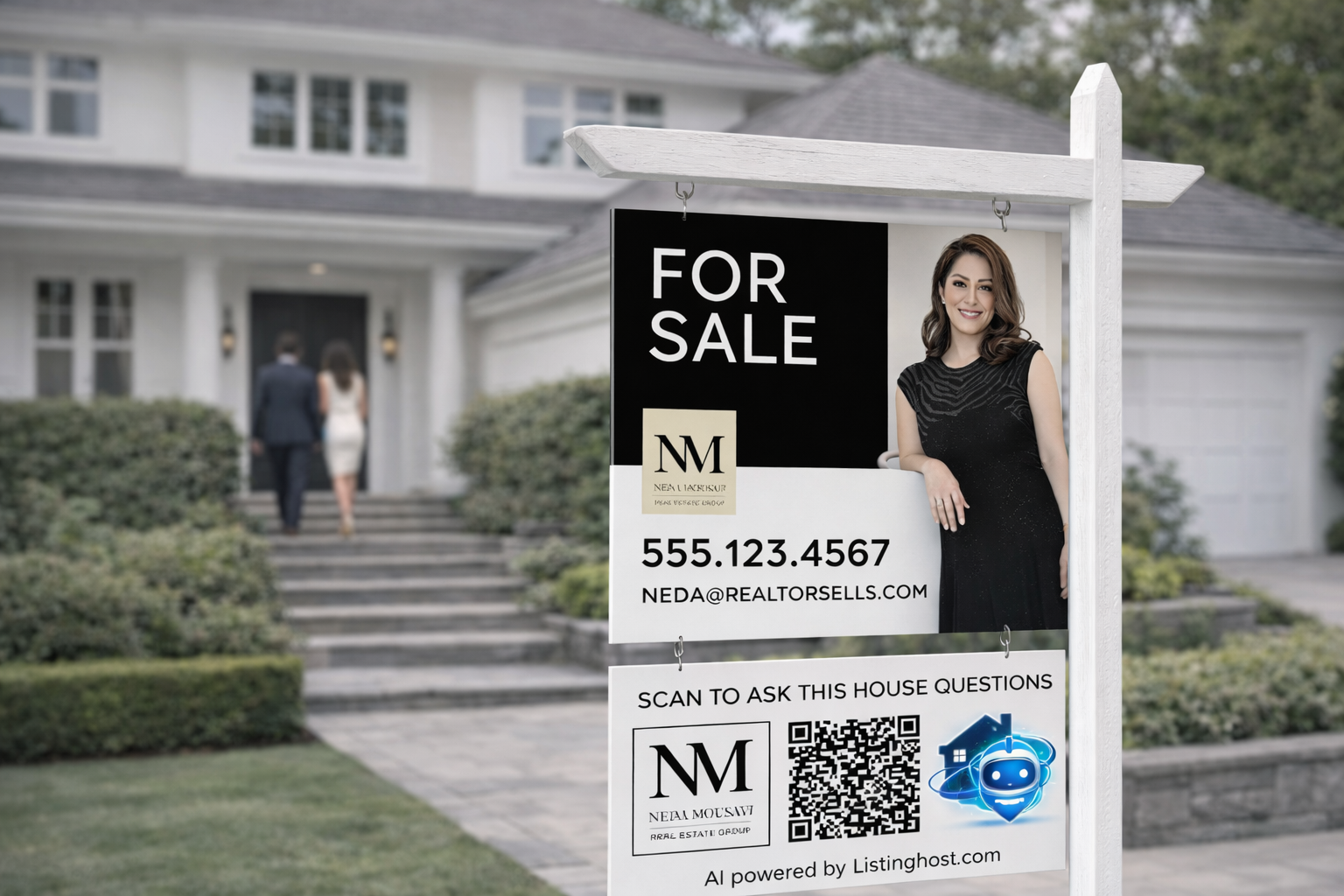
Three places open houses leave leads on the table
Open houses usually do not fail because nobody showed up. They fail because the process breaks in three predictable spots: sign-in friction, delayed follow-up, and lost buyer context.
1. Mobile-First Buyer Behavior Makes Sign-In Sheets and Manual Forms Awkward
Zillow reports that 50% of buyers who used an agent prefer texting or messaging apps, compared with 33% who prefer phone calls.
But the default open-house play is still high-friction: “Write your name, phone, and email while I’m standing here.” In 2026, that can feel like pressure. So people hesitate. They put down incomplete info. Or they skip it entirely.
The real cost isn’t just “fewer sign-ins.” It’s fewer questions, fewer real conversations, and fewer chances to help.
Buyers want to browse and ask questions on their own terms. Many prefer messaging over phone calls, but the default process still asks for a manual sign-in while standing in front of an agent. That creates pressure and lowers response quality.

“With ListingHost AI, open house visitors don't feel pressured to engage and ask questions.”
— Neda Mousavi
2. Minutes matter and open houses create tiny windows of intent
Even when you do capture interest, the follow-up window is short. Response-time research from InsideSales/XANT highlights how dramatic the drop-off can be: they report conversion rates jump more than 8x when you attempt contact in the first 5 minutes, compared with waiting 5 minutes to 24 hours.
Open houses are high-intent micro-moments: someone is literally standing in the home, picturing their life, ready to ask real questions. If your reply happens hours later, you’re no longer responding to intent, you’re following up after the moment has passed.
That’s why speed isn’t motivational fluff. It’s a structural advantage.
3. Contact info without context does not convert
A name and phone number are not enough. The most valuable data point is the buyer question itself: what they asked, what they care about, and what should be sent next.
- “Can I tour Saturday at 2?”
- “How strict is the HOA?”
- “Is there space for a nursery?”
- “Is the backyard big enough for a pool?”
“With ListingHost AI I am able to capture verified lead information and I am in control of my leads.”
— Neda Mousavi
Because “control” isn’t just ownership. It’s control over lead quality: who they are, what they asked, and what they care about.
Here’s what this looks like in real life. Someone walks into an open house, does a quick lap, and pauses at the kitchen island. They’re interested, but they’re not ready to have “the conversation.” If the only option is a sign-in sheet, you’ll lose them. So we changed the system: we use ListingHost AI to let visitors text the house the moment a question pops into their head, get what they want (details, disclosures, tour options), and automatically capture the lead with the context of their question, without awkward pressure.
The setup: one message, strategic QR placement
Someone scans at the entry table, someone else scans the yard rider after dinner, and another buyer asks a question while standing in the kitchen. None of this feels pushy, and each conversation captures intent automatically.
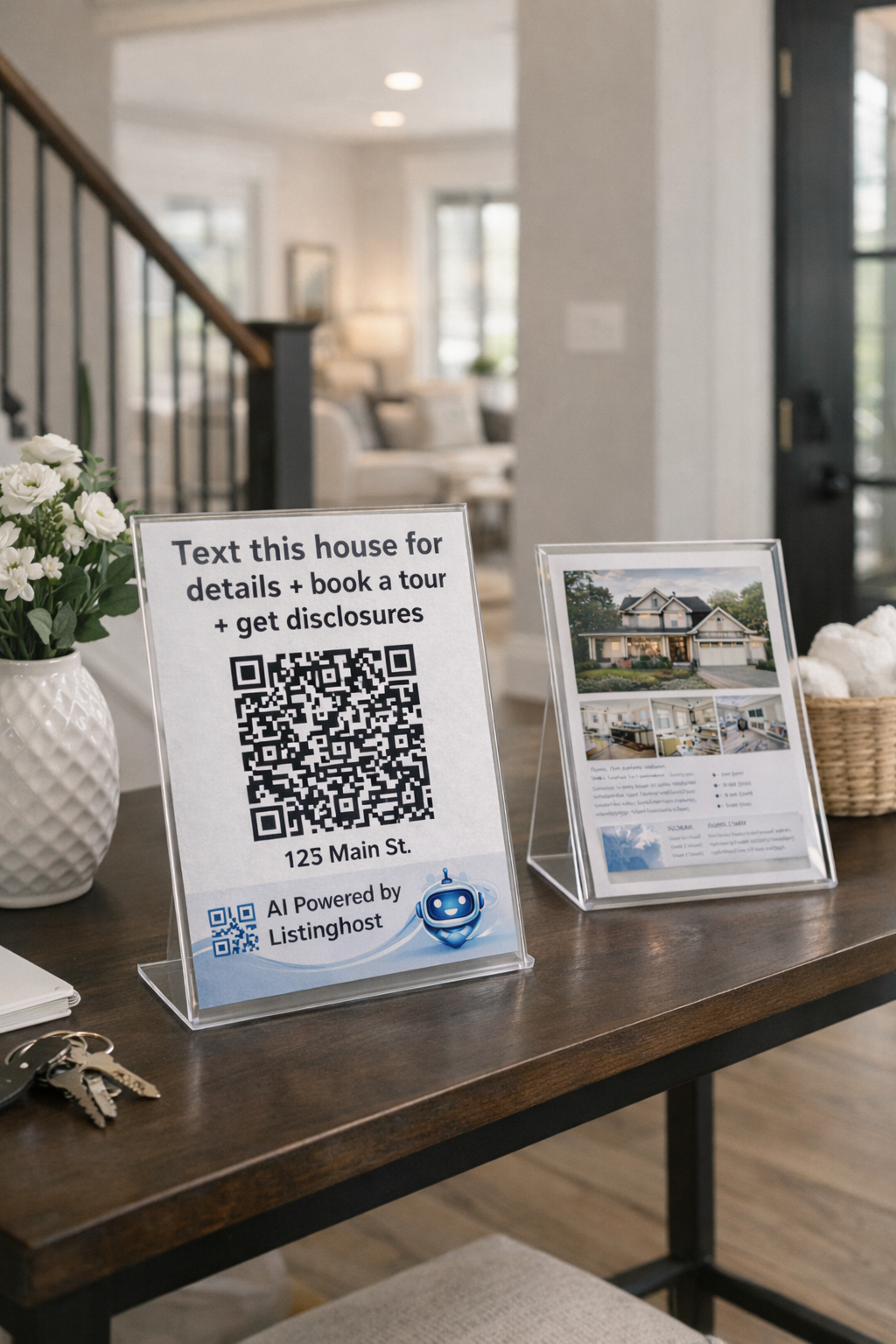
Placement #1: Entryway table (first impression capture point)
This is the highest-volume touchpoint. Keep the entry surface clean so the QR is the obvious next step. Use a low-pressure welcome script that invites scanning for details and disclosures.
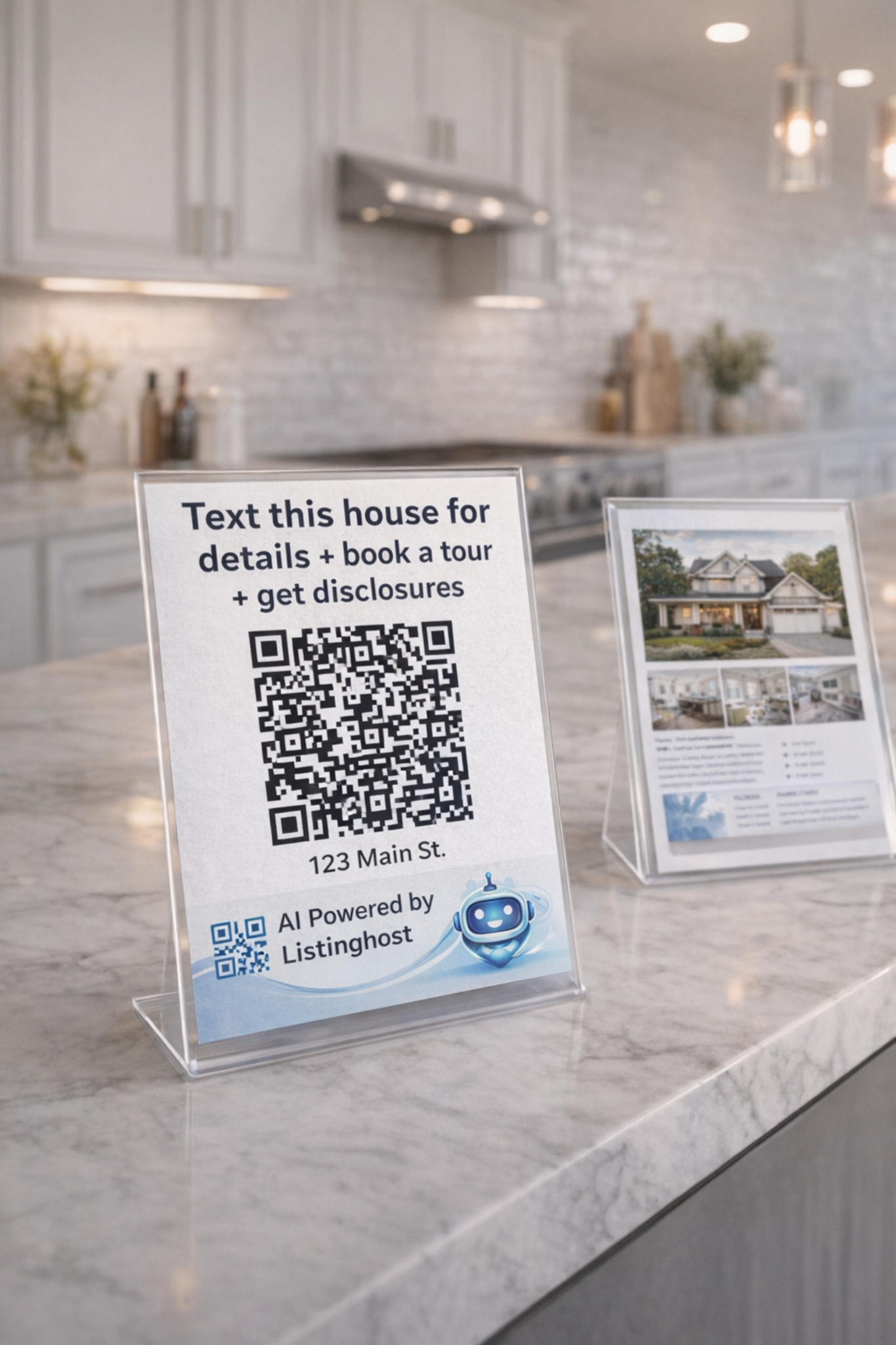
Placement #2: Kitchen counter (high-intent question zone)
Kitchens are where practical and emotional questions surface. Place a second QR stand near the island and prompt buyers to text questions about layout, upgrades, and disclosures.
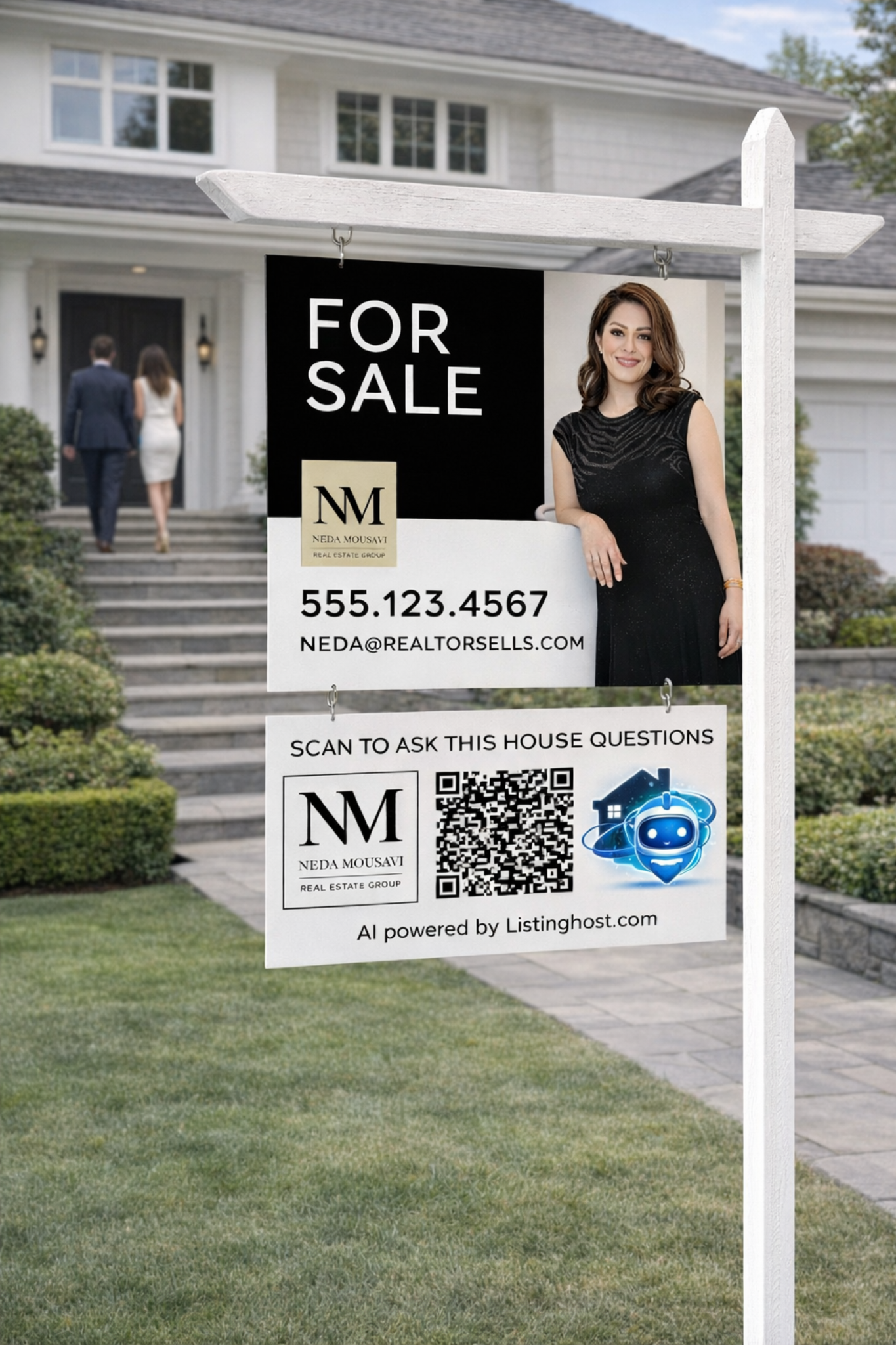
Placement #3: Yard sign rider (drive-bys and after-hours)
This reaches neighbors, passersby, and return visitors who never enter the home. Keep the rider scannable from distance and clear at a glance.
Now imagine the weekend playing out: someone scans at the entry table, another scans the yard rider after dinner, and someone else texts a question while standing at the kitchen island. None of them felt pressured. They simply used ListingHost AI QRs to get details, and start a real conversation, while the lead (and the exact question they asked) gets captured automatically.
But the setup alone doesn’t monetize an open house. The win comes from what you do next: route every conversation into your CRM and run a consistent follow-up process so nothing slips. That’s why Follow Up Boss emphasizes not just capturing open house leads, but automating follow-up through your systems.
Here are the 6 rules we follow every weekend to turn scans into showings, appointments, and clients.
The ListingHost AI Open House Method (6 rules)
Rule 1) One clear message. One channel.
Open houses are noisy. If you give people options, they do nothing. So we run one message everywhere:
Text this house for details + book a showing + get disclosures
That single sentence does three jobs:
- Reduces pressure (it sounds like help is available, not a mandate to “sign in”).
- Creates urgency (showings + disclosures are time-sensitive).
- Sets up better follow-up (the conversation starts with real intent).
What to do (simple):
- Put your exact phrase on every scan sheet, stand, and rider.
- Do not add “follow me,” “sign in,” “register,” or anything that competes.
Rule 2) Put the QR at the decision points.
Placement beats design.
We use three decision points where people naturally pause:
- Entry table (highest volume).
- Feature area (kitchen island is the workhorse).
- Yard sign rider (drive-bys + after-hours).
What you are engineering: a moment where the buyer either...
- Engages right now (scan + text), or
- Walks out and disappears.
The operational lesson is simple: an open house produces more value when buyer questions are captured and reviewed while interest is still fresh.
Rule 3) Give them a reason to opt in.
You do not ask for contact info. You offer something they actually want.
Your promise (keep it consistent with your CTA):
- Disclosures (strongest).
- Details (feature sheet, upgrades, HOA basics, etc.).
- Showings (clear next step).
On the sign, you are not saying: “Give me your name.”
You are saying: “Here is the fastest way to get what you came for.”
This aligns with how Zillow frames buyer expectations: many buyers prefer text and messaging when working with agents.
Rule 4) Make every buyer conversation usable in your follow-up system.
The method breaks down if buyer context lives only in an inbox or a stack of unread messages.
Your operational goal:
- Review the buyer's listing-specific question in ListingHost AI message logs.
- Move high-intent conversations into the follow-up process your business already uses.
ListingHost AI keeps the conversation attached to the listing, so the next action can start with what the buyer actually asked.
What to do (practical):
- Set a clear owner and response standard for high-intent questions.
- If you use Follow Up Boss, you can add its email address to your ListingHost AI profile for email handoff.
- Configure any CRM-specific routing and action plans in that CRM; do not assume a direct integration is creating them for you.
Use a repeatable process so relevant buyer context does not depend on memory.
Rule 5) Set a speed-to-lead SLA (and a backup).
Here is the uncomfortable truth: the lead is hottest right after the question gets asked.
InsideSales’ lead response research shows conversion rates can be 8x higher when you attempt contact in the first 5 minutes versus waiting longer.
So we run a simple SLA:
Hot lead (tour intent, financing, or “can I see it today?”):
- Follow up immediately.
Warm lead (info + browsing):
- Follow up within 24 hours.
Backup rule (so nothing rots):
- If the assigned agent does not respond fast enough, the lead gets escalated (ISA, broker, shared inbox, or second agent).
We would rather double-contact a lead than lose a lead.
Rule 6) Weekly Listing Engagement Review (15 minutes).
This is how you turn open houses into a system instead of one-off chores on the weekend.
Once per week, review:
- What questions buyers asked most.
- Which hot leads did not get contacted fast enough.
- Which listings generated the most conversations.
What you will change next weekend:
- The sign copy.
- The MLS-connected listing if any home details have been updated.
- What you promise (disclosures, details, or tour).
- The follow-up plan.
If you follow the setup and the 6 rules, you are no longer hosting an open house. You are running a simple conversion system: buyers engage without pressure, the conversation gets captured with context through ListingHost AI, and follow-up happens while intent is still hot.
That last part matters. InsideSales/XANT has shown that conversion rates can jump 8x when you attempt contact in the first 5 minutes instead of waiting longer. So the real win is not just collecting more names, it is creating a workflow that makes fast, relevant follow-up automatic instead of optional.
Want to see it live?
If you want to run this workflow, choose the plan that fits your active listing volume, create a verified account, and build your first MLS-connected listing.